Wiz Daily Journal

Headlines, decoded. Positions, considered.

Dr. Kenneth Reaves on energy, commodities, trade and geopolitics — and how the ATWWI family stays positioned to get P.A.I.D., bull or bear.

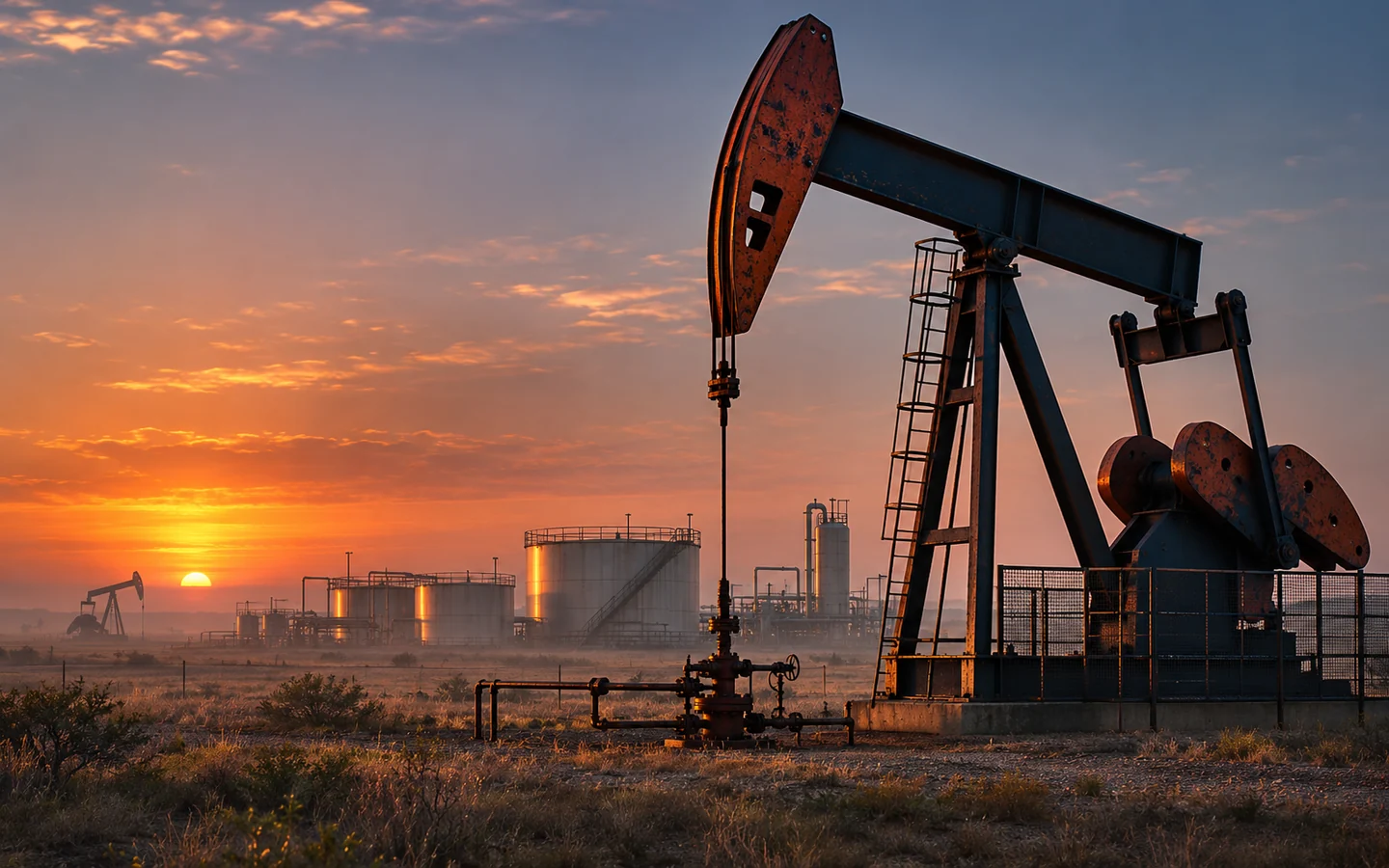
An oil pumpjack and storage tanks at sunset

US, Israel, Iran War Disrupts the U.S. Energy Landscape

"Big" changes are happening across the energy landscape — and it's not just the prices jumping at the pump.

Those, too, have been climbing higher, with the average price for a gallon of gas now standing at $4.09, according to AAA — UP 37% since "OPERATION EPIC FURY" began on February 28th, 2026.

A barrel of WTI (CL1:COM) has INCREASED by the same percentage, climbing from $68 to the current $93/bbl.

The U.S. has nearly transformed into a "NET" CRUDE EXPORTER for the first time since WORLD WAR II!!!

Exports last week climbed to 5.2M barrels per day, the highest level in seven (7) months, and imports were slightly above that level, with the gap narrowing to just 66,000 bpd. The U.S. still imports a "MASSIVE" amount of crude, since U.S. refineries were set up decades ago to process imported heavier "SOUR" grades rather than the domestic light "SWEET" crude that has been gushing since the FRACKING revolution in the 2000s.

ATTACKS on REGIONAL ENERGY INFRASTRUCTURE and the CLOSURE of the STRAIT of HORMUZ led to the loss of 10.1M bpd of supply in March (2026), according to the INTERNATIONAL ENERGY AGENCY (IEA), which called it the "LARGEST OIL SUPPLY DISRUPTION IN HISTORY."

U.S. crude benchmark WTI is now gaining prominence as a more secure alternative to MIDDLE EASTERN barrels, with traders avoiding "CONFLICT ZONES" and refiners looking for alternative sources.

GLOBAL OIL companies are set to generate "BILLIONS" of dollars in "PROFIT" from the current situation, as well as U.S. giants like ExxonMobil (XOM), Chevron (CVX) and ConocoPhillips (COP)!!!

CL1:COMXOMCVXCOP

While they are generating more "PROFIT" per barrel, it is still a "HIGH PRICE" / "HIGH RISK" environment, where SUPPLY CHAIN DISRUPTIONS can wipe out gains — as can disruptions preventing the PHYSICAL DELIVERY of cargoes, and INCREASED "OPERATIONAL" and/or "HEDGING" COSTS.

The return of "CASH" to shareholders might be a bigger focus than massive production spikes, so let's pay close attention when the ENERGY "BIG BOYS" report EARNINGS (ERs) at the end of this month (April 2026).

BULL/BEAR WE DON'T CARE… YOU, ME, WE our "BELOVED" ATWWI FAMILY will be poised to monetize whatever situation/outcome occurs and get "P.A.I.D."!!!

Peace & BlessingsKenneth Reaves, Ph.D.
A handwheel and blue water main in a utility room

WATER Bills Are INCREASING Faster Than You Think!!!

Aging pipes, climate pressure, and infrastructure costs hit households next.

Most families keep an eye on groceries, insurance, and mortgage payments. WATER is the bill that often gets ignored — until a rate notice arrives and the new price is already locked in.

The warning sign is right in the inflation data: water, sewer, and trash services are UP about 4.7% year over year, according to the latest CPI category table — and unlike many expenses, this is a cost you can't substitute away…

Why this matters

WATER is a "DISTINCT," "UNAVOIDABLE" cost driver because it's tied to PHYSICAL INFRASTRUCTURE and PUBLIC HEALTH rules. Pipes, pumps, treatment plants, lab testing, and emergency crews don't get cheaper just because households conserve. A large share of the cost is "FIXED," so utilities still need steady revenue even when usage falls.

The second driver is FINANCING…

When systems age, repairs turn into "REPLACEMENT CYCLES" — and those projects are usually paid for over decades. In plain terms, your monthly bill becomes the "REPAYMENT PLAN" for capital upgrades, plus the ongoing cost of running a safe system.

That's why water increases often arrive "QUIETLY." They are approved locally — through a rate study, a utility board vote, or a city council agenda item — then they COMPOUND year after year.

Big providers are now publicly mapping out long spending runways that tend to translate into future rate filings… A major regulated utility, for example, recently laid out a $46–$48 billion, 10-year upgrade plan in a new report on large-scale INFRASTRUCTURE investment — the kind of capital program that typically supports higher customer charges over time.

At the municipal level, the same math shows up as multi-year "RATE PATHS"… The San Antonio, Texas utility has proposed increases that would push the typical bill materially HIGHER by 2029 — a clear example of how "SMALL ANNUAL INCREASES" can become a meaningful household line item.

New industrial demand is also adding pressure. With DATA CENTERS expanding rapidly, Microsoft (MSFT) announced steps aimed at preventing the public from absorbing added utility burdens.

Treat WATER like property taxes and insurance: a "MUST-PAY" expense that tends to INCREASE with INFRASTRUCTURE "REALITY," not personal preference. Build a modest "UTILITY BUFFER" into your budget — and once a year, read your utility's RATE NOTICE the way you read an insurance renewal, because the "QUIET" bills are often the ones that "BITE" hardest.

Peace & BlessingsKenneth Reaves, Ph.D.
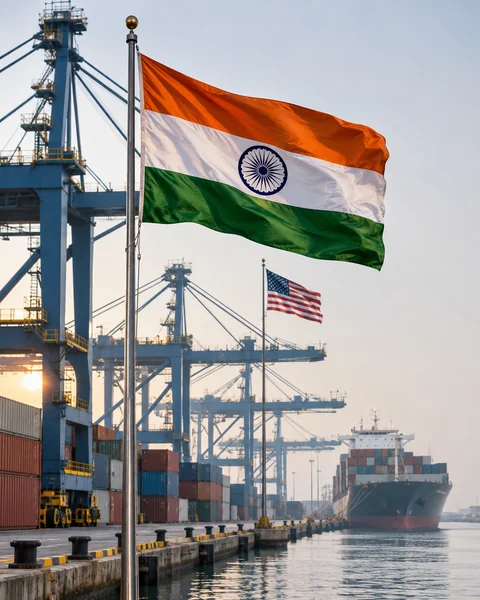
Indian and U.S. flags above a container port

A "Clever" Way to Monetize the Recent U.S./India Trade Deal

Buy as if the market will be closed for five years — and think the same way about international markets.

Warren Buffett is fond of saying that when you "BUY" shares of a company, you should do so as if the stock market will be "CLOSED" for the next five (5) years. Point being, if you like the LONG-TERM fundamentals of a business, then what it is trading for in the near term is irrelevant.

The other advantage to such an approach is that it would prevent you from selling your shares no matter what happens during that span. Five (5) years ago, the global economy was in disarray after the coronavirus pandemic upended the economy and severely disrupted global supply chains. Had you been forced to hang onto your stock until now, you would most likely be sitting on a large gain.

That analogy does not just apply to individual businesses. I believe it is even more helpful when thinking about INTERNATIONAL investing. Outside of the United States, most REGIONAL stock markets go through long cycles of "BOOM" and "BUST." For that reason, many investors eschew investing OVERSEAS.

I believe now may be an opportune time for YOU, ME, WE the ATWWI FAMILY to move some money into an INTERNATIONAL market that has not gotten much investor attention… During the past year, the iShares MSCI India ETF (INDA) has appreciated LESS than 5 percent, while the State Street SPDR S&P 500 ETF Trust (SPY) is UP more than 15 percent.

BUT, that all changed at the start of this week when INDIA PRIME MINISTER NARENDRA MODI had a long phone call with the White House… Afterwards, TRUMP announced an "AGREEMENT" that would result in both countries LOWERING their reciprocal IMPORT TARIFFS on each other, provided INDIA stops BUYING OIL from RUSSIA and purchases it from the USA (or VENEZUELA) instead.

There is a lot of room for ECONOMIC GROWTH in INDIA. It now has the LARGEST population in the world, growing by nearly one (1) percent last year (2025) while China's population SHRANK. Its MEDIAN AGE of 29.2 is eleven (11) years YOUNGER than CHINA's, and its FERTILITY RATE of 1.9 is nearly TWICE that of CHINA.

In short, all the pieces are in place for a SUSTAINED ECONOMIC "BOOM" in INDIA that could last DECADES!!!

The "bucket" approach

I do not suggest "BUYING" INDIVIDUAL companies in INDIA to capitalize on this opportunity. Its economy is a "WITCH'S BREW" of CAPITALISM, CRONYISM, and OLIGARCHISM rolled into one. Instead, I suggest taking a "BUCKET" approach by owning the ENTIRE stock market via INDA. Its top holdings include that country's dominant players in FINANCE, TECHNOLOGY, and MANUFACTURING.

INDASPY

You can think of those businesses as INDIA's stock market equivalent of what the "MAGNIFICENT 7" TECH STOCKS are to the United States… They are the engine that drives its economy, and this week they just got a "HUGE" BOOST from an unlikely source.

Peace & BlessingsKenneth Reaves, Ph.D.
XME allocation
Steel 32% · Coal 20%
Gold 16% · Other 32%

Greenland's Mineral Rights: The Tip of the U.S. "P.A.I.D." Iceberg

Making a portfolio adjustment to an event is not the same thing as profiteering.

Recently, I discussed "How To Get P.A.I.D. From The Recent U.S. Takeover of Venezuela." In that article, I suggested investing in COMMODITY PRODUCERS since they will be the ultimate beneficiaries of consolidation in the OIL and MINING industries. Fewer suppliers mean less competition, which should give producers more control over wholesale prices.

To be clear, I was not opining on the "LEGALITY" or "MORALITY" of that event… Whether or not this was the "RIGHT WAY" to do it is up for debate, which is outside my purview as a trader/investor/investment analyst. That said, this situation is far from over… In fact, it has only just begun!!!

Risk management

Making a portfolio "ADJUSTMENT" to this event is not the same thing as "PROFITEERING." MANAGING RISK is a core tenet of portfolio construction. You may disagree with what occurred while making "ADJUSTMENTS" in response to it to MANAGE RISK at the same time.

From a FINANCIAL perspective, I view this no differently than responding to previous "BLACK SWAN" events such as the CORONAVIRUS PANDEMIC. That is why I advocate taking a "PROACTIVE" approach to these types of events. This is not profiting from someone else's misery. It is MANAGING RISK to protect your assets from a new variable that previously did not exist.

A new "threat"

Now, a new "THREAT" to the GLOBAL COMMODITY markets has emerged. The White House has stated its desire to wrest control of Greenland's extensive METALS and MINERAL RESERVES "BY ANY MEANS NECESSARY," including MILITARY FORCE if a FINANCIAL deal cannot be made. If the U.S. gains control of Greenland's most valuable COMMODITY RESERVES, that will trigger "REPERCUSSIONS" in the GLOBAL FINANCIAL markets for years to come.

Actualize / monetize the sector

Having exposure to METALS and MINERALS in our portfolio(s) is one way to HEDGE against INFLATION. Those materials are integral to the production of a wide array of CONSUMER and INDUSTRIAL products. If the cost of acquiring those materials increases, so too will the price of the products that use them.

The easiest way to do that is to own shares of a fund such as the State Street SPDR S&P Metals & Mining ETF (XME). The fund's assets are currently allocated 32 percent to steel, 20 percent to coal & combustibles, 16 percent gold, 9 percent aluminum, 5 percent silver, 5 percent copper, and 13 percent diversified metals and mining.

XME

Recently, the fund's share price INCREASED 10 percent as Wall Street immediately recognized the implications of the Venezuela "TAKEOVER." If the White House bows to international pressure, this fund could just as quickly give back the gain(s)… HOWEVER, if the administration makes good on its promise, the recent gain(s) could just be the tip of the U.S. "P.A.I.D." ICEBERG!!!

Peace & BlessingsKenneth Reaves, Ph.D.

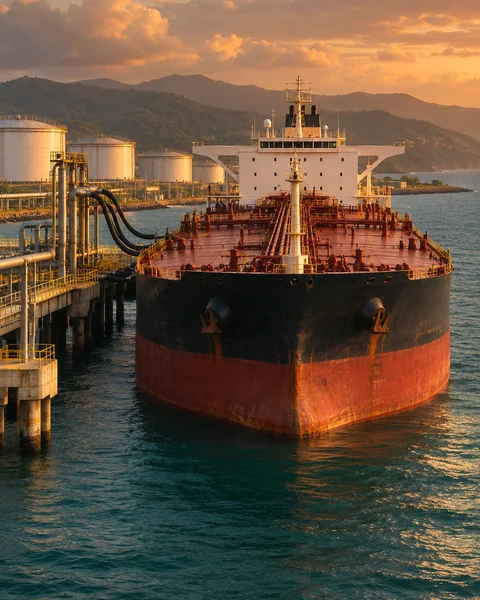
A crude oil tanker at a coastal export terminal

How to Get "P.A.I.D." From the Recent U.S. Takeover of Venezuela

Venezuela's oil industry did not collapse overnight, and it will not recover overnight either.

A week ago, Wall Street wasn't giving serious thought to the possibility of a "FORCED" regime change in Venezuela to gain control of its vast oil reserves. However, the United States removed Venezuela's long-standing political leader, abruptly reopening questions traders/investors have not seriously asked in years… Chief among them: could Venezuela's oil sector finally begin to recover, and if so, which companies stand to benefit?

This analysis is certainly NOT an endorsement or celebration of those events. It is a response to trader/investor "REALITY." When geopolitical shifts occur in a country with the WORLD's LARGEST "PROVEN" OIL RESERVES, capital markets immediately begin assessing EXPOSURE, RISK, and OPPORTUNITY!!!

Why the sector "failed"

In 2007 the Venezuelan government forced foreign operators into "MINORITY" positions and seized assets from companies that refused the new terms. ConocoPhillips (COP) and ExxonMobil (XOM) were among the most prominent companies affected. The Orinoco Belt consists largely of EXTRA-HEAVY CRUDE, requiring advanced reservoir management, steady diluent supply, and multi-billion-dollar upgraders. When these companies left, Venezuela lost far more than "CAPITAL" — it lost ENGINEERING DISCIPLINE, PROJECT MANAGEMENT SYSTEMS, and OPERATIONAL EXPERTISE. PDVSA inherited the "ASSETS," but not the "CAPABILITIES"!!!

The STEEP DECLINE (2007: 3.3 million bpd to 2025: 900 thousand bpd) became visible around 2015 — well before U.S. sanctions targeted PDVSA in 2019. Political "PURGES" stripped out technical leadership, MAINTENANCE BUDGETS were CUT, SKILLED WORKERS left, and when OIL PRICES "COLLAPSED" in 2014, PDVSA's "FRAGILE" FINANCES collapsed with them.

"SANCTIONS" did not "BREAK" Venezuela's oil industry. PDVSA's "MISMANAGEMENT" did, and "SANCTIONS" made any recovery far more DIFFICULT… This distinction matters, because "SANCTIONS" are also the part of the DECLINE that could REVERSE most quickly.

Who benefits

If Venezuela's oil sector begins to reopen, Chevron (CVX) is uniquely positioned to benefit. It is the ONLY major U.S. oil company that never fully exited Venezuela. Through a series of U.S. Treasury licenses, it maintained joint ventures, kept personnel on the ground, and preserved operational continuity. Chevron (CVX):

  • still has active assets and infrastructure
  • knows the reservoirs and upgrading systems
  • has established relationships with PDVSA
  • is already exporting Venezuelan crude under U.S. authorization

ConocoPhillips (COP) plays a different role. It was expropriated in 2007 and later won an $8.7 billion arbitration award; the ongoing court-supervised sale of Citgo Petroleum is one of the primary avenues for recovery. For the ATWWI family, COP represents a SECONDARY and more SPECULATIVE ANGLE, tied to LEGAL OUTCOMES and POLITICAL STABILITY rather than existing operations.

HIGHER SALES REVENUES COMBINED WITH LOWER PRODUCTION COSTS EQUAL MORE PROFITS.

The "knee-jerk" reaction

Wall Street bid "UP" shares of CVX by five (5) percent on Monday, January 5th, 2026, on more than four (4) times its AVERAGE DAILY VOLUME. HOWEVER, that type of "KNEE-JERK" reaction to an "UNEXPECTED" event usually turns out to be WRONG!!! A "SEISMIC" geopolitical event of this magnitude has "ENORMOUS" repercussions, some of which cannot be foreseen.

I do know of a way to get "P.A.I.D." from it. The Fidelity Global Commodity Stock Fund (FFGCX) is a "BELLWETHER" position that owns shares of companies that produce OIL, MINE FOR METALS, and GROW CROPS — its top holdings include Chevron (CVX), Exxon Mobil (XOM), Archer-Daniels Midland (ADM), Agnico Eagle Mines (AEM), and Corteva (CTVA).

CVXCOPXOMFFGCXADMAEMCTVA

WHEN THE PRICES OF COMMODITIES RISE QUICKLY, PROFIT MARGINS FOR THE COMPANIES THAT PRODUCE COMMODITIES INCREASE BECAUSE THEIR OPERATING COSTS ARE MAINLY FIXED.

Today, OIL in Venezuela is in play… Soon, it may be PRECIOUS METALS in Greenland… Later, it could be FOOD CROPS in some other part of the world.

Peace & BlessingsKenneth Reaves, Ph.D.

↑ Back to top

The Wiz Daily Journal is educational commentary, not investment advice. Tickers are named to explain concepts, not as recommendations. See the full disclaimer.

Get the Journal the day it's written

Members receive every Wiz Daily Journal entry plus real-time P.A.I.D.™ text alerts when market conditions turn monetizable.